
Comparing Beauty & Beast and East o' the Sun
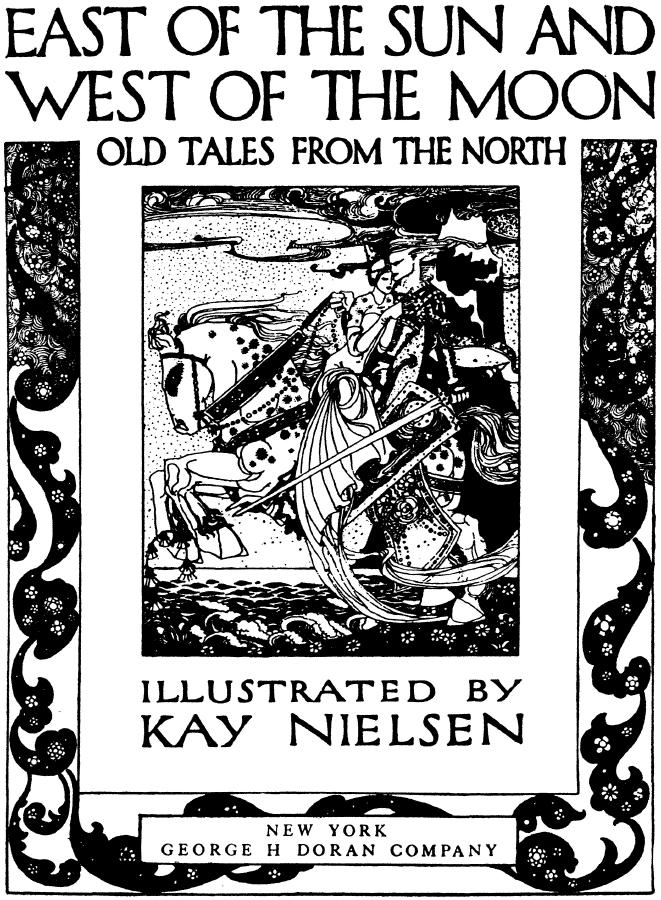
Click image for link to text at Project Gutenberg
Your Name: ________________________________________
Guide and worksheet for comparing Disney’s Beauty and the Beast and Dasent’s “East o’
the Sun and West o’ the Moon”
1) In the oral story (“East o’ the Sun”) the opening formula is simply “Once on a
time . . . .” In the Disney movie, the opening is much more elaborate, and the
viewer is given a motive for the Prince being transformed into a beast. What is
the reason?
2) Which of Propp’s five character roles (dramatis personae) does Gaston fill in the
film? How is this part of the plot different from the oral tale?
3) Which of Propp’s dramatis personae do the animated household objects fill in the
movie? Why are they given a bigger role in the film than their counterparts are in
the oral story?
4) How does looking at the oral tale help us know show is the “hero” in Disney’s
Beauty and the Beast? Why is the hero harder to identify in the film?
5) What instances of Olrik’s “law of contrasts” do you see in the film version of
Beauty and the Beast?
6) In the oral story “East o’ the Sun” the lassie is given an interdiction by the bear—
“Don’t talk alone with your mother.” As we expect, there is a violation of that
interdiction; the lassie does talk with her mother and receives instructions on how
to see who comes into her bed at night. Is Belle given an interdiction in Beauty
and the Beast? If so, what is it? Are the two interdictions comparable in any
way?
7) In the oral tale, the lassie discovers that the bear is a prince when she spills tallow
on his shirt and wakes him up. She must then go in search of him. In the film,
when does Belle discover that the beast is really a prince? What significance does
this timing issue have for the plot of each version?